
Equipping a Multi-Sport Hall: Layout, Storage and Buying Checklist
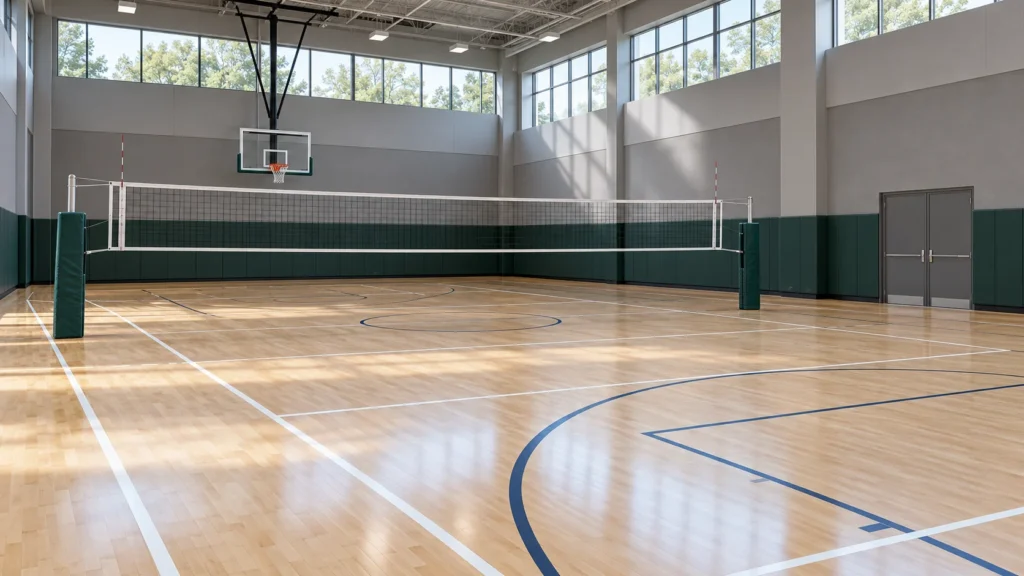
Equipping a multi-sport hall starts with a programme of use, before selecting individual items. Basketball units, volleyball equipment, training accessories and storage need one coordinated plan. Without an agreed changeover process, moving equipment can consume session time and leave circulation routes obstructed.
In this guide: Programme of use · Hall survey · Equipment choices · Storage and movement · Handover and changeovers · Quotation checklist · Common questions
Define the priority sport and operating programme
A hall may host teaching in the morning, club training in the evening and competitions at weekends. These activities can require different equipment, surrounding space and positions for coaches and officials. Identify the priority sport and secondary activities before writing the buying list.
Sport England's sports-hall guidance also promotes programme-led planning and identifying priority and secondary sports. This helps develop a project brief; projects in Iran must confirm final requirements against the relevant sport, competition level and local rules.
- Which sport occupies most of the schedule?
- Is the hall for teaching and recreation, or official competition too?
- How often will layouts change, and who will manage them?
- Is simultaneous use of separate areas actually needed?
- How will disabled users, coaches and spectators access the facility?
Survey usable space before ordering
Building dimensions are not the same as usable sports space. Record columns, door swings, courtside benches, fixed equipment and exit routes. Assess clear height against lighting, ducts and roof obstructions rather than relying on the building's overall height.
Check the playing area and surrounding clearances for each sport separately. Court markings fitting on the floor do not establish competition suitability. Confirm final court dimensions, run-offs and equipment positions with the relevant technical authority before installation.
Record the floor construction and condition, existing anchors and available structural information. New sockets or wall and floor fixings need an assessed substrate and installation detail. Court lines alone are not a drilling plan.
Fixed or mobile equipment depends on the operating scenario
Basketball: assess playing and stored positions together
Identify installation positions, supporting construction and space needed in both operating and stored conditions. Mobile equipment needs a movement route, parking space and the manufacturer's specified securing arrangement. Wall-mounted or ceiling-mounted systems need structural and fixing assessment.
“Mobile” does not mean that securing is unnecessary. Stored equipment must not obstruct exits or another activity. Availability of a particular model and suitability for the project must be confirmed during the enquiry.
Volleyball: specify a compatible complete system
Review the net, posts, height and tension adjustment, installation method and protective padding together. Do not infer compatibility between an existing socket and a new post from appearance. See the volleyball equipment selection guide for more detail.
In a shared hall, specify the floor condition and socket closure arrangement after removing posts. Removed parts, cables and installation tools should have designated storage rather than remaining beside the court.
Markings and padding belong in the combined plan
Review line colours and hierarchy on one combined drawing before application so users can distinguish the courts. Confirm marking-material compatibility with the floor. Assess potential impacts with walls, columns and equipment in every layout; the sports hall impact-padding guide helps develop this part of the brief.
Equipment storage needs its own plan
Allocate specific locations for stored equipment. Check equipment dimensions, access space, door operation and turning movements together. A store that accommodates an item internally is insufficient if the item cannot pass through its doorway or negotiate the approach.
- Compare door width and height with equipment transport dimensions.
- Assess thresholds, slopes, turns and wheel compatibility with the floor.
- Provide identifiable locations for balls, nets, posts and installation parts.
- Keep frequently used items accessible without moving several heavy units.
- Keep circulation, emergency access and activity areas free of temporary storage.
Size the store around the actual inventory and storage method. A fixed percentage alone cannot resolve every hall's layout and movement constraints.
Practise the changeover during handover
Handover involves more than counting items. With the staff who will operate the hall, rehearse a complete changeover: remove equipment, transfer it to storage, install the next session's equipment, check connections and clear routes.
Record the time and staffing required during this exercise, then schedule changeovers around actual conditions. Define setup and removal instructions, before-use checks, defect reporting and stop-use criteria. Keep loose or damaged equipment out of use pending assessment by a competent person.
Multi-sport hall equipment quotation checklist
- Project location, drawings, photographs, usable dimensions and clear height;
- Priority sport, secondary sports, level of play and session programme;
- Floor type, wall and roof substrate information and existing anchors;
- Equipment layouts in both playing and stored conditions;
- Store dimensions, openings and movement routes;
- Equipment quantities and models, padding and fixing requirements;
- Separate scopes for preparation, transport, installation, training and handover;
- Required technical documents, maintenance information and replacement parts;
- Target operating date and approval process for samples or installation drawings.
Compare offers against the same brief. Equipment prices may exclude substrate preparation and installation. Send project information to Ajand Noavar for current pricing, availability and delivery timing; model availability and service scope are confirmed after reviewing the enquiry.
Common multi-sport hall questions
Is every basketball hall suitable for volleyball?
No. Usable dimensions, clear height, run-offs, post installation and level of use need separate assessment. Basketball markings do not establish suitability for another sport.
Is mobile equipment always the better choice?
The choice depends on changeover frequency, movement routes, storage and trained staffing. Each model's securing and maintenance requirements also matter.
Can storage be decided after purchasing equipment?
Resolve storage and transport routes before the final order. Folded or stored dimensions are part of product selection.
What should an initial enquiry include?
A drawing or measured hall dimensions, photographs, intended sports, floor details, storage arrangements and target opening date are useful starting points.
Ask Ajand Noavar about hall equipment and quotations · Browse the sports equipment catalogue
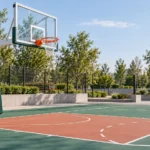
Reference for programme-led planning, coordination of sports and storage: Sport England sports halls guidance. The working checklists are editorial suggestions for preparing a project brief. Confirm final requirements against local rules, sport regulations and manufacturer instructions. Source checked on 18 October 2026. The AI-generated cover is a conceptual venue, not an actual Ajand project or a specific catalogue model.



Please sign in to leave a comment.