
Pool Equipment Maintenance: Lane Lines, Starting Blocks and Fixings Checklist
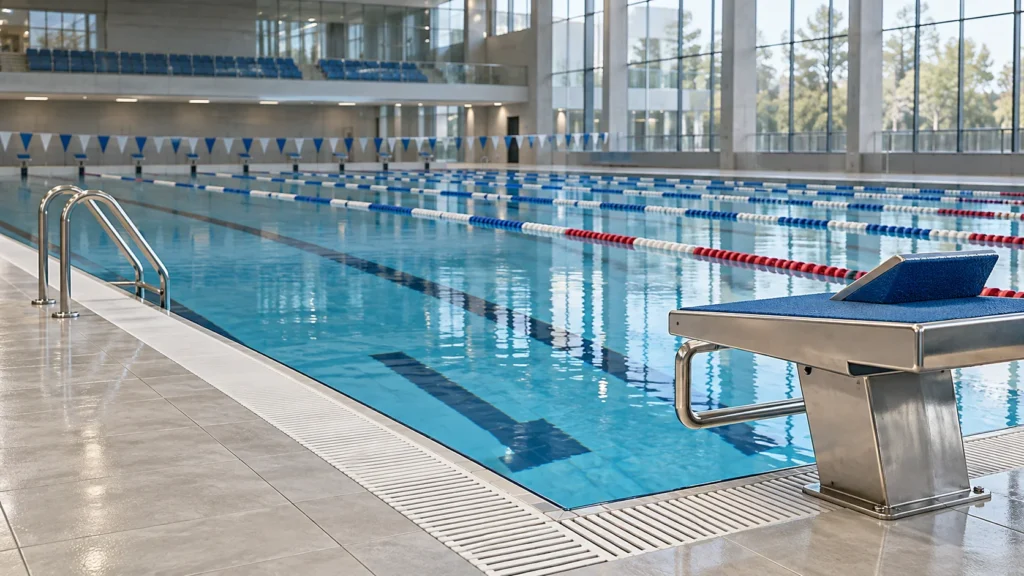
Pool equipment maintenance starts with fittings and condition checks, as well as cleaning. Lane lines, starting blocks and storage reels work in a demanding wet environment. Recording their condition helps facility managers plan repairs and replacements before a defect disrupts training.
In this guide: Opening checks · Lane lines · Starting blocks · Cleaning and storage · Inspection records · Repair and replacement · Common questions
Pool equipment checklist before use
Use a consistent inspection route so less visible areas are included. This is a practical suggested checklist for poolside equipment. Specialist service intervals depend on the product, usage, manufacturer instructions and the facility's operating plan.
- Keep poolside routes clear of cables, dismantled parts and lane-line storage equipment.
- Look for broken floats or discs and visible sharp edges.
- Check lane-line end fittings and tensioners for visible damage or deformation.
- Inspect starting-block tops, bases and fixings for visible damage or looseness.
- Where installed, include ladder handrails, lifeguard-chair steps, seats and fixings.
- Confirm corrective actions and return-to-use approval for previously reported defects.
A visual check does not establish fixing strength or replace technical inspection. When a defect is found, stop use of the affected equipment and restrict access under the facility's safety plan until a competent person has assessed it.
Lane-line maintenance: cable, floats and tensioner
Look beyond colour and float alignment. Inspect the cable covering, end connections and tensioning system. Record damaged discs, detached floats, exposed cable strands and deformed fittings.
More tension is not automatically better. The setting and adjustment method must follow the product instructions and suit the anchoring points. There is no single setting for every model. Leave adjustment or release of loaded fittings to trained staff.
Use a compatible method and reel for collection. Avoid dragging the cable across the deck, tight bends or crushing components into a small storage space. Inspect the reel's wheels, fixings and metalwork too.
Starting blocks: check the top and installation together
Check the top for cracks, lifting surface material and contamination. Report visible looseness, corrosion, damaged fixings or changes in position at the base. A clean top does not establish the condition of its anchorage.
Avoid guessed bolt tightening, unidentified replacement fixings or improvised repairs. Replacement parts, fitting methods and any specified tightening torque must come from manufacturer documents or the technical lead.
A sound block alone does not authorise diving. Water depth and conditions in the starting area, the activity, supervision and permitted use must be confirmed in the pool operating plan. Arrange appropriate checks after movement, impact or repair before returning the block to use.
Cleaning and storing poolside equipment
Obtain cleaning instructions and confirm compatibility with each material. Do not assume the same cleaner suits metal, plastics, cable coatings and non-slip surfaces. Follow the product instructions for cleaner concentration and contact time.
Store cleaning equipment and removed items in a designated area without obstructing circulation or emergency access. Follow product instructions for washing, rinsing and drying. Label spare parts with model details and receipt dates.
Metal surfaces and connections also need inspection. A stainless-steel description does not remove the need for checks or make every cleaner suitable. Record corrosion, unusual staining or surface changes for assessment.
What should an inspection record contain?
- Date, time, inspector and equipment identifier;
- Location and available model or part details;
- A description and clear photograph of the defect;
- Use status: approved by the responsible assessor, or out of use pending assessment;
- The person responsible for follow-up and required action;
- Replaced parts, repair date and subsequent inspection result;
- The person authorising return to use and the date.
Assign responsibility and a follow-up deadline to every open issue. Identify equipment out of use during shift handovers. Set specialist service intervals using manufacturer instructions and site conditions; opening checks do not replace that service.
Repair or replacement: prepare a clear enquiry
Prepare an overall photograph and a close-up of the defect, manufacturer and model details, installation dimensions, fixing information and the intended operating date. For lane lines, include the measured distance between anchors and end-fitting details. For starting blocks, provide substrate information and existing installation drawings.
Repairability and replacement-part compatibility must be established for the actual model. Similar appearance is insufficient. Clarify parts, transport, installation and the proposed service scope separately. Ask Ajand Noavar for current pricing, availability and delivery timing for pool equipment; the ability to supply a particular model or part is confirmed after reviewing the enquiry.
Common pool equipment maintenance questions
Should lane lines always be as tight as possible?
No. Follow manufacturer instructions and the anchoring arrangement. Uncontrolled extra tension can load the connection system unnecessarily.
Is there one service schedule for all equipment?
No. Product details, environment, usage and manufacturer instructions determine the schedule. Before-use checks and specialist servicing are separate parts of the maintenance plan.
What should staff do if a starting block is loose?
Stop its use and restrict access under the facility's safety plan. A competent person must assess the fixing and approve any return to use.
Does this checklist cover water treatment?
This guide focuses on poolside sports equipment. Water quality, treatment and chemicals require a separate operating programme and trained operators.
Ask Ajand Noavar about pool equipment selection and quotations · Browse the sports equipment catalogue
References for equipment inspection scope and the separate water-operation programme: Sport & Play pool equipment inspection service and PWTAG Code of Practice. The working checklist is general editorial guidance and does not replace manufacturer instructions or local requirements. Sources checked on 14 October 2026. The AI-generated cover depicts a conceptual venue, not an actual Ajand project or a specific catalogue model.



Please sign in to leave a comment.