
Stadium Refurbishment: Sustainable Maintenance and Equipment Checklist
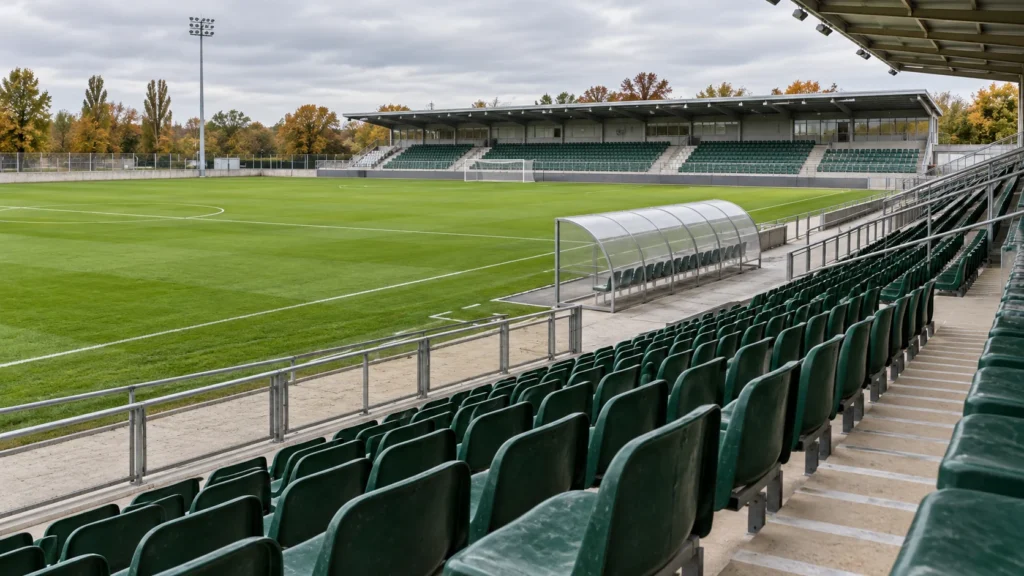
Stadium refurbishment works best when equipment purchasing is coordinated with maintenance, repair access and the way the venue operates. New seats, a team shelter or a replacement goal are parts of a larger system. The installation substrate, fixing method and availability of replacement components also matter.
In this guide: The latest FIFA news · Initial survey · Priorities · Seats, shelters and goals · Lifetime costs · Handover and maintenance · Common questions
What does the latest FIFA news mean for stadium equipment?
In its official report published on 23 October 2026, FIFA described an infrastructure workshop held in Mexico on 15 and 16 October. Representatives of 23 member associations attended a programme addressing the planning, management, maintenance and sustainability of sports facilities.
Ajand Noavar's editorial takeaway for facility managers is to plan future operation alongside the purchasing programme. The guidance below is our general project checklist. The FIFA report does not establish a new purchasing requirement for every stadium or approve particular commercial equipment.
1. Start with an equipment register
Before preparing an order, make a simple record for each equipment group. Rather than writing only “replace seats”, identify the terrace block, the number of damaged seats, fixing condition and photographs of the installation. This makes quotations easier to compare and helps establish the actual scope.
- Identity: type, quantity, location and manufacturer or model where known;
- History: approximate installation date, previous repairs and recurring defects;
- Installation: substrate, moisture and sunlight exposure, maintenance and cleaning access;
- Documents: drawings, installation instructions, maintenance guidance and parts information;
- Operation: frequency of use, closure windows and the person responsible.
A visual survey does not replace a technical assessment of structures, fixings or building services. Where cracked substrates, loose connections, significant corrosion or breakage are found, take the affected equipment or area out of use pending technical review. A replacement component alone will not remedy a defective substrate.
2. Set repair and replacement priorities
Prepare three lists for the project meeting. This is a suggested management approach, rather than an official FIFA classification:
- Immediate action: defects affecting safety or circulation; control access and obtain specialist assessment.
- Planned repair or replacement: items that technical assessment allows to be addressed within an agreed window; record the part, responsible person and deadline.
- Maintain in service: sound equipment that can remain in use with appropriate care; retain its inspection programme.
Coordinate phased work with matches and training. Each phase needs a clear plan for work-area separation, equipment delivery routes and spectator access. Keeping part of the venue open requires the operator's approval and compliance with site requirements.
3. Questions to ask about seats, shelters and goals
Stadium seats: assess the fixings and substrate together
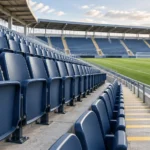
Check installation dimensions, row arrangement, concrete or supporting structure condition and the existing fixing pattern. A similar-looking replacement seat is not evidence of compatibility with old holes or supports. Ask about individual-seat replacement, fixing availability and cleaning methods. Our stadium seat buying guide helps prepare the enquiry.
Team shelters: frame, cover and pitchside position
Record frame condition, cover fixings, edges, surrounding drainage and entry and exit routes. Before replacing a cover or moving a shelter, confirm component compatibility and restraint requirements with the supplier. Wind exposure and installation conditions need project-specific technical assessment. See the team shelter planning guide.
Goals: restraint and associated components
State the surface, fixed or mobile configuration, anchoring location and required net fittings in the replacement enquiry. Components must suit the assembly and the manufacturer's instructions; a heavy frame alone does not establish stability. Our football and futsal goal guide explains the information to prepare.
4. Compare lifetime costs alongside purchase price
The facility management section of FIFA's Stadium Guidelines discusses long-term maintenance planning and total cost of ownership. This considers capital and operating costs, including maintenance and replacement, across the venue's lifecycle.
For your own project comparison, request these items separately so an offer does not appear cheaper simply because installation or accessories are omitted:
- Equipment price and quantities, with the exact model and supplied components;
- Transport, unloading, removal of old equipment and substrate preparation;
- Installation and checks needed for handover;
- Consumables, replaceable parts and their supply arrangements;
- Cleaning, inspection needs and downtime during repairs;
- Warranty terms, service scope and each party's responsibilities.
No single saving percentage or equipment lifespan applies to every project. Exposure, use, installation and care affect the outcome. Where cost or consumption data are unavailable, record the assumptions so the comparison can be updated.
5. Make handover the start of maintenance
At the end of each phase, obtain the installed-equipment list, operating and maintenance instructions, supplied parts and outstanding-items record. Set inspection methods and intervals using the manufacturer's instructions, risk assessment and project requirements. One fixed calendar will not suit every item.
A shared log with date, location, defect, action, responsible person and review outcome makes repairs traceable. Consider reinspection after movement, repair or a damaging event, and assign responsibility for returning equipment to service.
Stadium refurbishment enquiry checklist
- City, venue type and training or competition use;
- Photographs, dimensions, quantities and equipment condition;
- Separate scopes for repair, replacement and new supply;
- Permitted work windows and intended opening date;
- Previous installation documents and event requirements where available;
- Transport, removal, installation, training and spare-parts needs.
Send the information to Ajand Noavar to discuss the sports-equipment scope. Current pricing, availability, service scope and delivery time must be confirmed for the specific order.
Common stadium refurbishment questions
Does refurbishment mean replacing everything?
No. Technical assessment may identify items suitable for maintenance or repair alongside those needing replacement. Base the decision on condition and component availability.
Can new seats use the old fixings?
Only after confirming compatibility between the model, fixing system and substrate. Similar appearance or dimensions alone are insufficient.
Does the new FIFA report create a purchasing requirement?
The report concerns an infrastructure training programme. It should not be read as a universal purchasing mandate or approval of a particular model.
What should an initial enquiry include?
Send photographs, dimensions, quantities, location and the proposed scope. A final quotation may require a site survey and confirmation of details.
Discuss stadium equipment and request a quotation · Browse the Ajand equipment catalogue
Sources: FIFA's official report published on 23 October 2026; FIFA Stadium Guidelines, section 4.2, Facility Management. Sources checked on 25 October 2026. News analysis and project checklists are Ajand Noavar editorial guidance and do not replace project-specific technical assessment. The AI-generated cover is conceptual, not a photograph of a completed Ajand project or a specific catalogue model.

Please sign in to leave a comment.