
Sports Hall Safety: Choosing and Installing Impact Padding
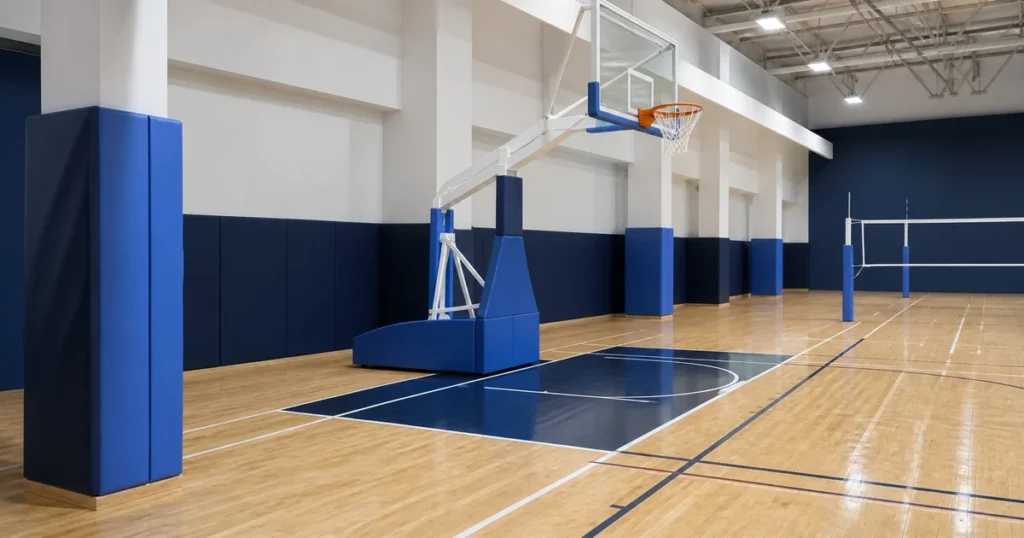
Sports-hall safety begins by identifying impact zones, not by buying one standard thickness of foam. Walls, columns, basketball units, volleyball posts and goal frames should be assessed separately because their shapes and likely impact directions differ.
What impact padding can and cannot do
Padding spreads impact energy over a wider area and reduces direct contact with hard surfaces or structural edges. It complements safe spatial design, adequate run-off areas and supervision; it does not replace them.
Prioritise the main collision zones
- Columns and wall edges: use continuous multi-face protection without exposed gaps.
- Basketball supports: protect the body and projecting areas below the basket.
- Volleyball posts: use a shaped cylindrical cover matched to the post diameter.
- Futsal and handball goals: fit stable protection compatible with the frame.
- End walls: consider continuous wall padding where the run-off area is limited.
Specify more than foam thickness
Density, recovery, coverage, distance from the hard surface and cover construction all affect performance. Covers should resist abrasion, suit the hall environment and allow cleaning. Seams, zips and hard fasteners should stay away from likely contact zones.
Installation and inspection
Padding should not rotate, slide or detach during impact. Select fixings for the wall, floor or equipment and keep rigid parts concealed. Inspect covers, foam deformation, seams and restraints after a significant impact and as part of the facility’s routine checks.
Information to include in a quotation request
- Hall plan and sports played
- Photographs from several angles
- Exact width, height, depth and shape
- Wall, floor or equipment construction
- Cleaning and removability requirements


Please sign in to leave a comment.