
Choosing Swimming Lane Lines and Starting Blocks
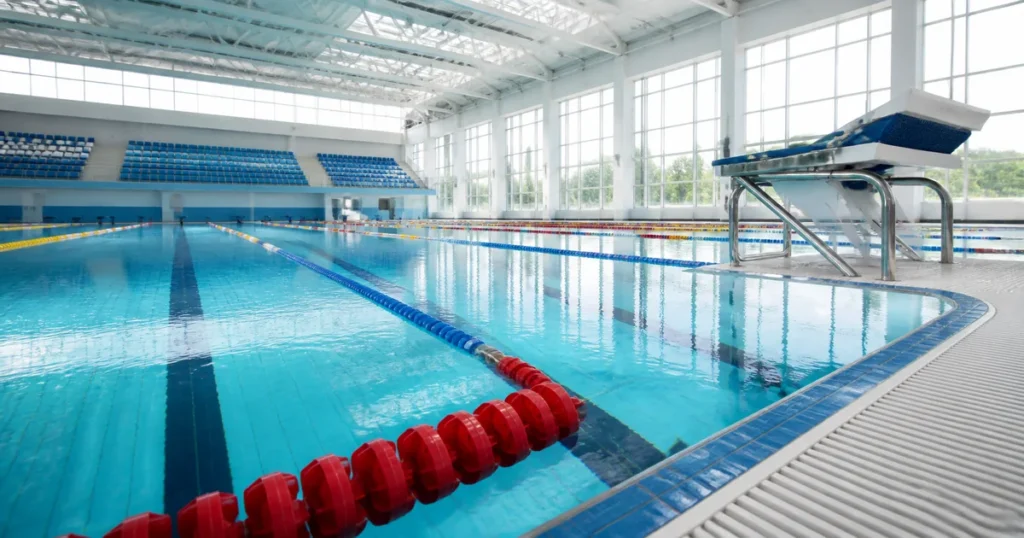
Select lane lines and starting blocks as one pool system. Pool use, measured lane length, water depth at the start end, fitting quality and storage arrangements all affect the final specification.
Lane-line performance depends on the full assembly
Lane lines separate swimmers and suitably designed discs can help reduce surface-wave transfer. Performance depends on component diameter and arrangement, cable tension, anchor points and correct installation at both ends.
- Pool use: teaching, club training, public sessions or competition.
- Measured length: use the distance between anchors, not only the nominal pool length.
- Cable and tensioner: coated cable, durable fittings and controlled adjustment support safety and service life.
- Colour layout: clearly identify lane ends and relevant pool zones.
Starting-block requirements
A block should be rigid, stable and slip resistant. Evaluate top dimensions, installed height above the water, platform angle, hand grips and water depth together. The supporting structure and fixing points must also be suitable for the forces created during a start.
Cleaning and storage
Long exposure to treated pool water can accelerate wear and colour change. Rinse equipment when it is removed, inspect discs and cable covering, and store the line without tight twists. A dedicated reel or trolley improves handling in busy pools.
Ordering checklist
- Pool length, width and lane count
- Measured anchor-to-anchor distance
- Training or competition use
- Water depth and final block height
- Material resistance in a humid, treated-water environment
- Cleaning, collection and storage plan
Please sign in to leave a comment.